Hotel Upselling Technology: From Room Upgrades to Ancillary Revenue
Digital upselling drives 15-25% more ancillary revenue. Learn optimal timing, platform options, pricing strategies, and how to present offers guests want.
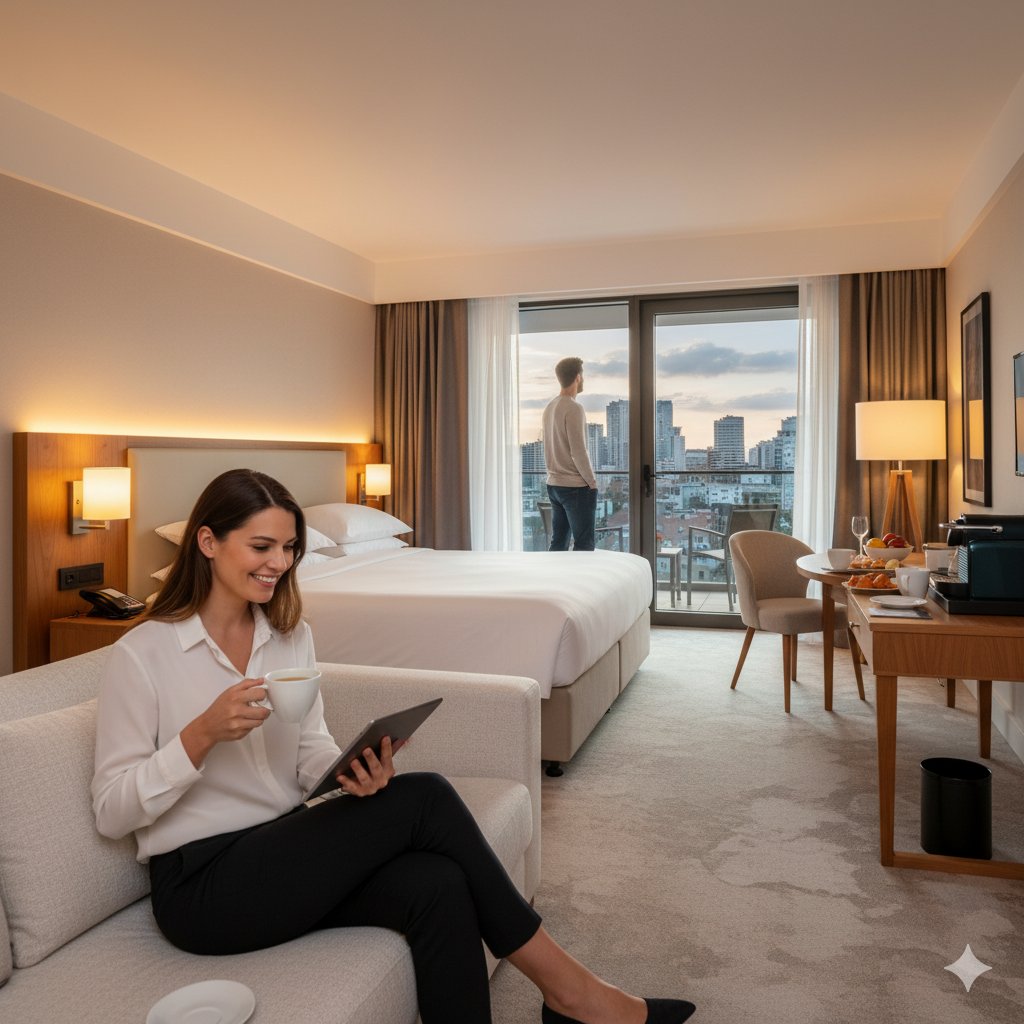
The front desk upgrade pitch feels awkward for everyone involved. The guest just arrived after a long journey. The staff member reads from a script about premium rooms. Both parties sense the transaction is forced.
Yet guests genuinely want upgrades and additional services—they just want to consider them on their own terms, without pressure. Digital upselling solves this by presenting offers through channels where guests can browse, evaluate, and decide privately.
According to Nor1 research (now part of Oracle), properties implementing digital upselling report 15-25% increases in ancillary revenue. Not because they’re selling harder, but because they’re selling smarter.
Why Digital Upselling Works
Human psychology explains the gap between front desk pitches and digital offers:
Time to consider. A guest receiving an upgrade offer 48 hours before arrival has time to think, check with their travel companion, and decide without pressure. At the front desk, they need to answer immediately while tired and distracted.
Price transparency. Digital offers show exact costs upfront. Guests can evaluate whether $40 for a balcony is worth it.
Exploration freedom. Digital interfaces let guests browse all options—spa treatments, late checkout, airport transfers—without asking questions or appearing indecisive.
Reduced embarrassment. Some guests feel awkward requesting an upgrade. Others worry about being seen as easy marks. Private digital transactions eliminate social friction.
The Upselling Timeline
Effective digital upselling happens at multiple touchpoints:
At booking. Right after reservation, guests receive offers for room upgrades, parking, breakfast packages. Conversion rates are modest (2-5%) but volume of impressions is high. This works especially well with direct booking strategies where you control the entire guest journey.
48-72 hours before arrival. The sweet spot for upgrades. Guests are thinking about their trip, excitement is building, and there’s time to process changes. Conversion rates often hit 10-15% for well-crafted offers.
At check-in (digital, not verbal). For guests who didn’t upgrade earlier, a digital touchpoint—email, SMS, or web notification—offers another chance. “Your room is ready! Want to upgrade to a suite for just $60 more tonight?”
During stay. Ongoing opportunities for spa appointments, dining reservations, late checkout. QR codes in rooms work well here, letting guests browse options at their own pace.
Hotels maximizing upsell revenue work all these touchpoints, not just one.
Platform Options
Several platforms specialize in hotel upselling:
| Platform | Focus | Best For | Key Capability |
|---|---|---|---|
| Oaky | Pre-arrival upselling | Data-driven optimization | A/B testing, analytics |
| Nor1 (Oracle) | Dynamic pricing | Demand-based pricing | Automated rate optimization |
| Revinate | Marketing + upselling | Guest lifecycle | CRM integration |
| RoomRaccoon | All-in-one PMS | Consolidated stack | Built-in upselling |
| Duve | Guest experience | Pre-arrival journey | Communication + upsells |
| Guestivo | QR-based services | In-stay upselling | Mobile ordering |
Oaky focuses specifically on pre-arrival upselling with strong analytics and A/B testing capabilities.
Nor1 (Oracle) offers sophisticated dynamic pricing for upgrades based on demand and guest segments.
Revinate combines upselling with broader guest marketing and communication tools.
RoomRaccoon includes upselling as part of its all-in-one PMS platform.
Broader guest experience platforms like Duve and Guestivo integrate upselling into pre-arrival communication workflows.
Room Upgrades: The Mechanics
Room upgrades represent the largest upselling opportunity for most properties. The process:
Inventory analysis. The system identifies unsold premium rooms and calculates upgrade pricing that maximizes revenue while remaining attractive.
Dynamic pricing. Upgrade costs should vary based on demand. During sold-out weekends, upgrades might be unavailable or priced high. During soft periods, aggressive pricing moves inventory and delights guests.
Guest targeting. Not every guest receives upgrade offers. Business travelers on expense accounts respond differently than families on vacation budgets. Sophisticated systems segment guests and customize offers.
Automatic fulfillment. When a guest accepts an upgrade, the PMS should automatically reassign rooms, update folios, and notify housekeeping.
Beyond Rooms: The Full Revenue Stack
Room upgrades get attention, but cumulative impact of smaller upsells often exceeds room revenue:
Early check-in / Late checkout. Guests pay for time flexibility. Price dynamically based on occupancy—$20 during slow periods, $50 or unavailable when fully booked.
Parking. Properties with limited parking can generate significant revenue by selling guaranteed spots in advance.
Breakfast packages. Guests often prefer pre-paying rather than deciding morning-by-morning. Bundle pricing increases uptake.
Spa and wellness. Appointment scheduling integrated with pre-arrival communication captures bookings from guests who might forget to call.
Experiences and activities. Tours, classes, transportation—anything your property offers or arranges through partnerships.
Room amenities. Champagne on arrival, flower arrangements, celebration packages. High margins and memorable stays.
F&B credits. Selling restaurant credits in advance increases on-property dining versus guests choosing outside options.
The portfolio approach matters. A guest declining a room upgrade might happily add spa services. Present the range of options, and guests self-select into what they value.
The Presentation Matters
How offers appear dramatically affects conversion:
Visual emphasis. Photos of the upgraded room perform far better than text descriptions. Show guests what they’re getting.
Clear pricing. “Upgrade for $45 total” converts better than “Premium rooms from $45/night” even if the math is identical.
Social proof. “Most popular” or “Guest favorite” labels increase uptake.
Scarcity signals. “Only 2 suites remaining” creates urgency when true.
Easy acceptance. One-click purchase without re-entering payment details.
Easy decline. Make saying no painless. Guests who feel pressured remember negatively.
Avoiding the Pushy Perception
The line between helpful and annoying is real. Guidelines:
Frequency limits. Don’t bombard guests. One pre-arrival upsell email is welcome; three becomes spam.
Relevance filters. A solo business traveler doesn’t need romantic package offers. Use guest data to filter inappropriate suggestions.
Easy opt-out. Let guests indicate they’re not interested. Respect that preference.
Value framing. Position offers as experience enhancements, not extraction attempts.
Staff awareness. When guests accept digital offers, front desk should acknowledge enthusiastically. “I see you upgraded to the ocean view—you’re going to love it!” reinforces the good decision.
Measuring and Optimizing
Track these metrics:
Offer impressions. How many guests see upselling opportunities?
Conversion rate by offer type. Which products sell? Discontinue underperformers.
Revenue per available room from upselling. A single metric capturing total impact.
Channel comparison. Do pre-arrival emails outperform check-in offers?
Segment performance. Which guest types respond best?
A/B testing improves results over time. Test pricing points, copy variations, timing, visual treatments.
The Revenue Impact
For a 50-room property averaging 70% occupancy, realistic targets according to Hotel Tech Report benchmarks:
- Room upgrades: $3,000-5,000 monthly
- Early/late checkout: $1,000-2,000 monthly
- Parking and transfers: $500-1,500 monthly
- F&B and amenities: $1,500-3,000 monthly
That’s $6,000-11,500 monthly in incremental revenue, much of it high-margin. Against technology costs of $200-400 monthly, the ROI is compelling.
Properties already doing manual upselling will see smaller gains. But nearly every hotel has unrealized potential that digital technology can capture.
The guests want these services. They just need the opportunity to buy them on their own terms.
For a complete view of the technology stack boutique properties should consider, see the boutique hotel technology guide.
Written by Maciej Dudziak
Topics