Hotel PMS and Self-Service: How to Reduce Front Desk Workload
How to combine your PMS with self-service tools to cut front desk workload by 30-40%. Online check-in, digital ordering, and AI concierge.
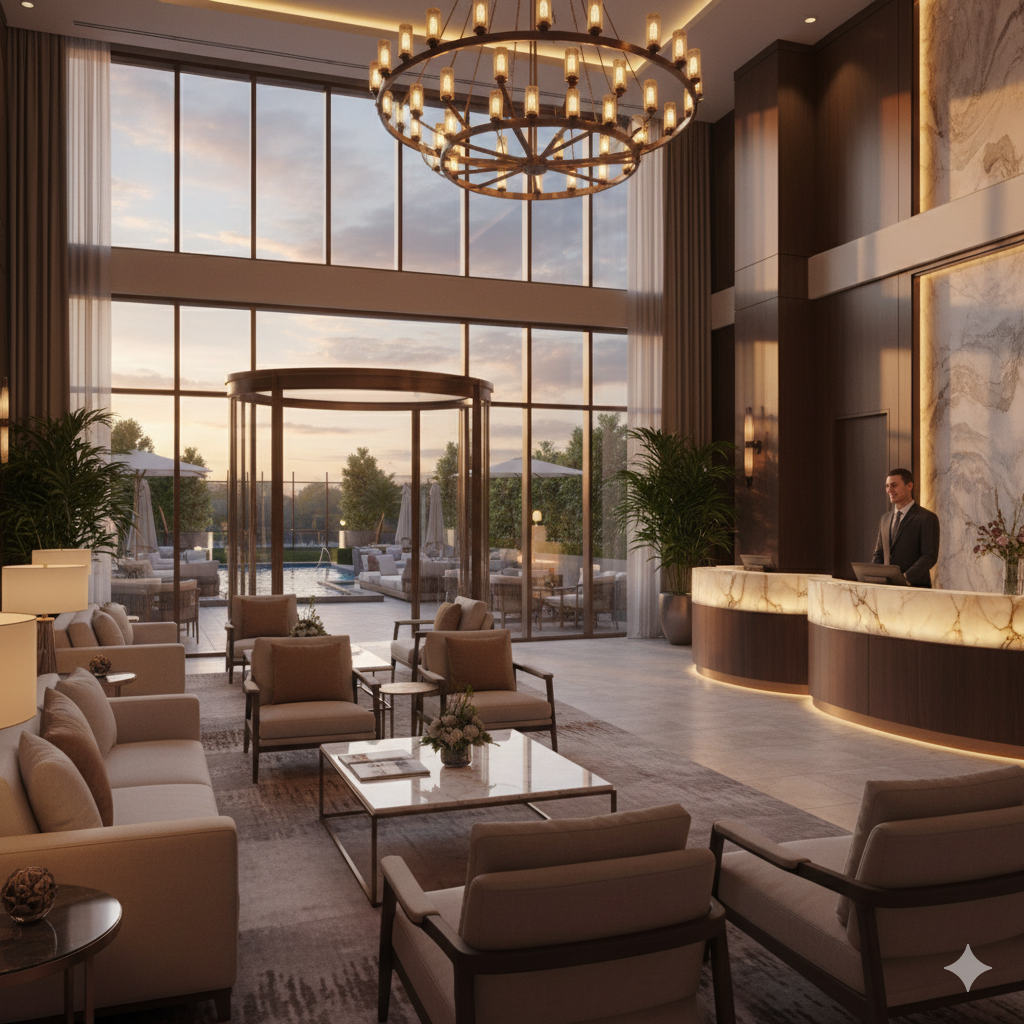
The front desk at a small hotel is a bottleneck that grows with every new communication channel. Ten years ago, guests called or showed up in person. Today they message on WhatsApp, send emails, book through four different OTAs, and expect an instant answer to every question.
Front desk staff at a 30-room hotel spend an average of 2-3 hours a day on repetitive tasks: answering WiFi password questions, taking room service orders by phone, handling requests for extra towels, manually entering ID data during check-in. This is work that requires neither human creativity nor empathy, yet it eats up time that could go toward genuinely serving guests.
The solution isn’t hiring another person. The solution is letting guests handle on their own what they’d prefer to handle on their own.
73% of guests prefer self-service
This isn’t a hypothesis. A 2022 Oracle Hospitality study found that 73% of travelers prefer hotels that offer self-service technology. Not because they dislike interacting with staff, but because they don’t want to wait in line at the front desk just to ask for the WiFi password.
Guests divide their needs into two categories, even if they don’t articulate it explicitly:
Transactional: WiFi password, ordering a coffee, requesting an extra pillow, breakfast hours, checking in after a long flight. These are things a guest wants to handle quickly, preferably from their phone, without getting out of bed.
Relational: a restaurant recommendation from someone who knows the area, help with an unexpected problem, a conversation about arranging an airport transfer with oversized luggage. This is where human contact has real value.
The problem at most hotels is that front desk staff handle both categories the same way. Answering a WiFi question takes up the same attention as resolving a room issue. Self-service frees up time for the latter.
Where PMS comes into play
A PMS by itself is not a self-service tool. It’s a database that knows everything about the reservation, the room, and the guest. Self-service tools need that data to function.
A guest portal needs to know which room a guest is in, when they check out, and what services they’ve ordered. Without a PMS connection, that information has to be entered manually, or the guest has to provide it with every interaction.
That’s why choosing a PMS with an open API and a robust integration ecosystem matters so much. Cloud-based PMS platforms like Cloudbeds, Mews, and Apaleo share reservation data with external tools in real time. Older on-premise systems require workarounds, manual exports, or simply don’t offer this capability.
Five layers of PMS-based self-service
You don’t have to implement everything at once. Each layer delivers standalone benefits, but combined they create a system that genuinely transforms how the front desk operates.
Layer 1: Online check-in
The single biggest time saver. Instead of transcribing ID data at the front desk, the guest fills out a form on their phone before arrival. The data flows into the PMS automatically. At check-in, the front desk confirms identity and hands over the key. For a 30-room property, that’s a saving of 30-60 minutes per day.
Platforms offering online check-in connected to a PMS include Guestivo, Canary Technologies, Duve, and Mews (built-in). More on the process and choosing tools in our contactless check-in guide.
Layer 2: Information portal
A digital version of the in-room information folder, except it’s always up to date and accessible from the guest’s phone. WiFi password, breakfast hours, emergency numbers, local area map, parking rules. The guest scans a QR code in the room and has everything at their fingertips.
This eliminates some of the most common front desk questions. According to data from properties using guest portals, WiFi and opening hours inquiries drop by 60-80% in the first month after launch.
The key is that the portal is linked to the PMS and knows which room the guest is in. That way it can display room-specific information (the WiFi network for that floor, the nearest stairwell) instead of generic content.
Layer 3: Digital ordering
Room service by phone is a process full of friction. The guest hunts for the menu card (if they can even find it), calls the front desk, staff write down the order, and pass it to the kitchen manually. Something can go wrong at every step.
Digital ordering through a guest portal eliminates these steps. The guest browses a menu with photos on their phone, places an order, and the kitchen gets a notification instantly. No interruption to the front desk.
The revenue impact is noticeable. Research from Hospitality Technology indicates that digital menus with photos increase order value by 15-25% compared to paper menus. Guests order more when they can browse the selection without the time pressure of a phone call.
Layer 4: Service requests
Extra towels, an additional pillow, a lightbulb replacement, a late check-out request. These requests can be fully automated: the guest selects from a list in the portal, the request goes to the right department with automatic assignment, staff fulfill it and close it out.
Removing the need to call the front desk lowers the barrier to making requests. Guests who wouldn’t call for an extra blanket at 11 PM (“I don’t want to bother them”) will happily tap a button in the app. Paradoxically, this improves satisfaction because guests get what they need instead of giving up on the request.
Layer 5: AI concierge
The newest layer, but one that’s quickly becoming standard. An AI chatbot answering guest questions 24/7 in their language. “What time does the restaurant close?”, “Where’s the nearest ATM?”, “Can I extend my stay by one night?” The AI answers these types of questions instantly, without involving the front desk.
Platforms like Guestivo, HiJiffy, and Asksuite use AI to handle 60-70% of typical guest inquiries without human intervention. For a small hotel receiving 50-80 messages a day, that’s 30-55 fewer interactions for staff. More on practical implementation in our AI concierge guide for hotels.
What this looks like in practice
Let’s take a specific example. A boutique hotel, 35 rooms, Krakow. Before implementing self-service, the front desk handled:
- 40-60 informational inquiries per day (WiFi, breakfast, parking)
- 15-20 room service orders by phone
- 10-15 service requests
- 20-30 minutes per guest for check-in
After deploying a guest portal with online check-in, digital ordering, and an AI concierge:
- Informational inquiries dropped by 70% (12-18 per day instead of 40-60)
- 80% of room service orders shifted to digital (front desk handles 3-4 phone orders)
- Service requests go directly to housekeeping (front desk no longer acts as middleman)
- Check-in takes 1-2 minutes (data already in the system)
The combined effect: the front desk reclaimed 2.5-3 hours per day. Not for idle time, but for conversations with guests, solving unusual problems, and upselling services there was never time for before.
Technical requirements
For self-service to work smoothly, you need a few things in place:
PMS with an open API. Without this, the guest portal won’t have access to reservation data in real time. Most cloud-based PMS platforms offer this, but confirm the API scope before purchasing.
Reliable WiFi. Guests use self-service on their own phones. If WiFi doesn’t work reliably throughout the property (including elevators and hallways), the experience will be frustrating. Practical tips in our guest WiFi setup guide.
QR codes in rooms. The simplest entry point to the guest portal. A code on the nightstand, in the bathroom, and by the door. The guest scans with their phone and gets access to all services without downloading an app.
A process for staff. Self-service changes workflows; it doesn’t eliminate work. Staff need to know how to monitor requests in the new system, how to respond to escalations from the AI concierge, and how to serve a guest who prefers traditional contact.
Costs and ROI
| Element | Monthly cost | Savings |
|---|---|---|
| Cloud PMS with API | $150-400 | Foundation of the system |
| Guest portal + check-in | $100-250 | 1-2h of front desk time per day |
| Digital ordering | $50-150 + commission per order | 15-25% higher order values |
| AI concierge | $100-300 | 30-55 fewer interactions per day |
For a 35-room property, a full self-service stack costs $400-1,100/month. The labor savings at the front desk alone are worth $800-1,500/month (assuming a staff cost of $15-20/hr and 2.5-3 hours saved daily). Revenue growth from digital ordering and upselling is an additional bonus.
ROI is positive for most properties with more than 20 rooms. Smaller properties need to do the math individually, since the fixed platform costs are spread across fewer rooms.
Where to start
Don’t deploy all five layers at once. Start with the one that solves your biggest problem.
If check-in is the bottleneck: Implement online check-in first. The fastest and most noticeable impact.
If the front desk is drowning in repetitive questions: Start with an information portal and QR codes. Minimal investment, immediate drop in inquiries.
If room service is creating chaos: Digital ordering streamlines the workflow and boosts revenue at the same time.
Once the first layer is stable, add the next one. Most properties reach full deployment within 2-3 months, layer by layer.
The critical thing is choosing tools that integrate with your PMS and with each other. Separate systems for check-in, ordering, and communication create the same fragmentation problem you had at the start, just in a new form. Integrated platforms that combine multiple layers in a single interface simplify both implementation and day-to-day management. We covered the topic of building an integrated tech stack in more detail in a separate article.
Frequently Asked Questions
How many front desk inquiries can self-service eliminate?
According to Oracle Hospitality research, well-implemented self-service tools reduce typical front desk inquiries by 30-40%. The biggest drop is in WiFi questions, room service orders, and requests for extra towels or pillows, which guests can handle on their own through a guest portal.
Do guests really prefer self-service over contacting the front desk?
A 2022 Oracle Hospitality study found that 73% of travelers prefer hotels that offer self-service technology. This doesn't mean eliminating staff, but rather shifting personal contact to situations where human interaction truly adds value.
Which PMS best supports guest self-service?
Cloud-based PMS platforms with open APIs offer the best self-service support. Cloudbeds, Mews, and Apaleo have extensive integration marketplaces with self-service tools. The key is that the PMS can pass reservation data in real time to external guest portals.
How much does it cost to implement PMS-based self-service?
The PMS itself costs $150-400/month for a small hotel. A self-service platform (guest portal, online check-in, digital ordering) adds another $100-350/month. The total of $250-750 is typically offset by front desk labor savings in properties with more than 20 rooms.
Written by Maciej Dudziak
Topics